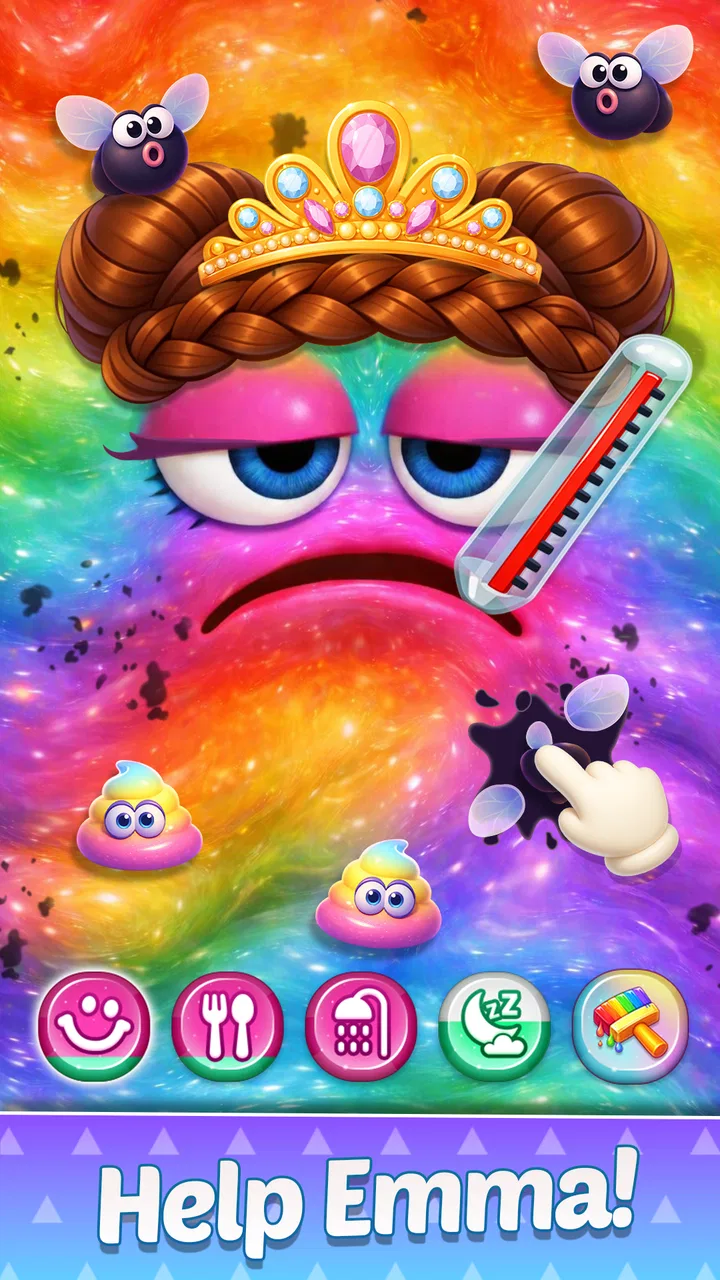
Emma – My Slime Pet Care Game
- 3.6
- Rating
- 500.00K
- Installs
- Free
- Price

 Analysis by App-foxy
Emma is the kind of role-playing game I open when I want something gentle rather than demanding. Instead of sending me into a long quest or asking me to master a complicated battle system, it places a cute slime pet at the center of the experience. My main job is to spend time with Emma, look after her, and use the available activities as a relaxing break.
That simple idea is also the game’s identity. Emma – My Slime Pet Care Game is not trying to replace a deep adventure RPG. It is a small virtual-pet experience from HappyTap, aimed at players who enjoy routine, decoration, and light interaction. The game is free to download, rated for Everyone, and runs on Android devices using version 6.0 or later. The current release is 1.0.11.
I think the best way to approach it is as a short daily ritual. I check on Emma, take care of the immediate needs the game presents, and then stop when the interaction no longer feels useful. That makes it easy to fit into a quiet morning, a study break, or the few minutes before bed. It is less suitable if I am looking for a story with major choices, complex character development, or a sense of constant progression.
You May Also Like

 Blood Strike: 2.5 Anniversary
Blood Strike’s Loadouts Turn Every Drop Into a Tactical Gamble
A close look at Blood Strike’s custom loadouts: how fast access to signature weapons reshapes its battle royale rhythm, rewards preparation, and narrows the gap between fights.

 Pandora - Music & Podcasts
Pandora’s Music Is Easy to Start, but Harder to Recover
Pandora’s strength is its low-effort path from a seed to a station. Its weak spot is how much confidence it asks you to place in connection, setup, and quiet recovery.

 8 Ball Pool
 Is Built on Rivalries, Rematches, and Routine
A close look at the rivalries, rematches, shared routines, and unanswered safety questions that turn a quick pool match into a persistent mobile community.

 Samsung Music
’s Quiet Strength Is Playing What You Already Own
Its reach comes less from spectacle than from dependable access to a personal library. That simplicity is both the app’s strongest retention engine and its ceiling.

 AccuWeather: Weather Radar
AccuWeather Review: A Quick, Clear Forecast for Everyday Decisions
For everyday plans, the best forecast is the one you can understand quickly. AccuWeather makes rain timing, radar, and local conditions easy to act on, with a few trade-offs.

 Hill Climb Racing
Why Hill Climb Racing Still Turns Crashes Into One More Run
A tiny car, a bumpy hill and one more upgrade: Hill Climb Racing keeps resurfacing because its simple chaos makes every near-miss feel personal.
More From Our News Desk
View All News


How the everyday care loop feels
The basic workflow is deliberately approachable. I begin by seeing what Emma needs, then move through the care activities available on screen. Feeding is the most obvious part of the routine, but the appeal comes from combining care with play and relaxation rather than treating each action as a task to clear as quickly as possible.
That distinction matters. In a traditional role-playing game, I usually think about equipment, combat efficiency, quests, and long-term character growth. Here, my attention is more personal and immediate. I am checking in on a pet, responding to her state, and making the interaction feel pleasant. The slime theme gives the game a soft visual personality that helps the routine feel less like a checklist.
For a realistic everyday example, I can imagine opening Emma during a ten-minute lunch break. I do not need to remember a complicated control scheme or reconstruct a story from the previous session. I simply look at the current situation, complete a few care actions, and close the game. That makes it a better match for fragmented free time than many larger role-playing games, which often feel awkward when played in very short sessions.
My advice is to avoid treating every visit as a race. The game works best when I slow down enough to notice what Emma is asking for and choose the activity that fits the mood. If I rush through every interaction, the experience can become repetitive quickly. If I use it as a small moment of companionship, the same limited set of actions feels more comfortable.
Who gets the most from the routine
Young players can understand the central idea without needing role-playing experience, and the Everyone age rating supports that approachable tone. Adults may also enjoy it as a low-pressure virtual pet, especially if they like cute games but do not want the responsibility or complexity of a larger simulation.
I would particularly recommend it to someone who wants a calm game that can be checked in short bursts. It can also work for families looking for a simple pet-care concept, although younger players may still need guidance around optional purchases. The free entry point makes trying it straightforward, while the gentle structure avoids the pressure found in more competitive games.
On the other hand, I would skip it if my priority were a substantial campaign. Players who expect branching dialogue, strategic battles, exploration, or a detailed progression system may find Emma too narrow. It is also not the right choice for someone who dislikes repeating care actions. Virtual-pet games depend on routine, and this one does not hide that fact behind a large amount of content.
Settings and habits that make the game easier to live with
Before settling into a routine, I would check the game’s available settings rather than immediately starting to play. The useful principle is simple: make the presentation comfortable for the way I intend to use it. If I am playing during a quiet break, I want the experience to feel calm rather than intrusive. If I am sharing a room, I should be mindful of sound and notifications where the device allows those choices.
I would also check whether the game’s visual or audio presentation suits the player using it. This is especially relevant when a child is playing, because a comfortable screen and sensible device volume matter more than squeezing every possible interaction into one visit. These are small adjustments, but they prevent the care loop from becoming annoying.
Another useful habit is to decide when a session is finished. Because Emma is designed around looking after a pet, I can easily keep tapping simply because the game remains available. I find it better to stop after the meaningful care actions are complete. That protects the relaxing quality and keeps the next visit from feeling like a chore.
Parents should also look at the purchase controls on the device before handing the game to a child. The game is free, but optional in-app items range from $0.49 to $1.99 each. That does not make the game unsuitable for families, but it does make device-level purchase safeguards a sensible part of the setup. A child should understand which actions are part of normal play and which may involve spending money.
The same advice applies to adults who want a completely controlled experience. I can enjoy the free care loop without assuming that every optional item is necessary. In a game this simple, the strongest reason to spend would be personal preference, not a need to unlock a competitive advantage. Keeping that distinction clear helps the game remain a relaxing choice instead of turning a brief pet visit into an impulse purchase.
Repeatable patterns for quicker, calmer visits
Experienced use here is less about discovering secret mechanics and more about building a repeatable order. I like to begin with the most immediate care need, then move to play, and finish by checking whether Emma is settled. Following the same broad sequence reduces aimless tapping and makes short sessions easier to manage.
I would not force that order when the screen suggests something different, but having a default pattern is helpful. It means I can open the game during a busy day and know what to do without spending the first minute deciding. The routine also makes it easier to notice when something has changed, because I am familiar with Emma’s usual presentation.
A second useful pattern is separating “care” visits from “relaxation” visits. During a quick check-in, I focus on the actions that keep Emma looked after. During a longer break, I spend more time with play and the pleasant visual side of the game. This prevents me from expecting every session to offer the same kind of reward.
I also recommend keeping expectations modest. The game’s appeal is not that every visit introduces a dramatic surprise. Its strength is the comfort of returning to a familiar pet. If I need novelty every time I open a game, I will probably prefer a larger RPG or a collection of mini-games. If I enjoy small variations within a stable routine, Emma makes more sense.
One practical tip is to use the game as a transition between activities rather than as a distraction that has no stopping point. A short visit after finishing homework, before starting a commute, or after putting away work gives the interaction a natural boundary. I find that this makes the game feel intentional and helps prevent the repetitive loop from taking over more time than I planned.
Where the lightweight design reaches its limits
The same simplicity that makes Emma accessible also limits its depth. Care games are built around repeated actions, so the long-term experience depends heavily on how much I enjoy returning to the same pet. If I want a clear sense of character levels, equipment upgrades, or tactical decisions, this is not likely to satisfy me for long.
Compared with a conventional role-playing game, Emma asks for much less concentration. That is a benefit when I am tired, but it also means there is less to study and optimize. Compared with a more elaborate virtual-pet simulator, it may feel less ambitious if I am searching for a large world, many systems, or extensive customization. Its place is between a toy-like pet interaction and a very light RPG, not at the deep end of either category.
There is also a trade-off in the emotional design. A cute slime pet can feel welcoming, but players who prefer realistic animals or dramatic storytelling may not connect with the presentation. The game’s charm depends on accepting its softness. I would not recommend it to someone who finds cute pet themes uninteresting simply because it has a role-playing label.
Optional purchases are another point to consider. The individual prices are small, but repeated small purchases can still add up. I would treat them as extras and decide on a personal limit before buying anything. The free starting point is valuable, yet the best experience for many players may come from enjoying the basic routine without trying to collect every available option.
Device compatibility is reasonably broad because the game supports Android 6.0 and newer, but older hardware can still affect how pleasant any modern app feels. I would keep the device updated and close unnecessary apps if performance becomes uncomfortable. That is not a special trick for Emma; it is simply a sensible way to give a small game the best chance of running smoothly.
How it compares with the usual alternatives
If I compare Emma with a large mobile RPG, the biggest difference is commitment. A large RPG expects me to learn systems and return for progression. Emma asks for attention in smaller pieces. I can play it without remembering a quest location or worrying that I am falling behind other players.
Compared with a general virtual-pet app, Emma’s role-playing classification suggests a slightly more game-like framing, but I would still approach it primarily as pet care. The important question is not whether it has the biggest feature list. It is whether I like spending time with one cute character through a simple cycle of feeding, playing, and relaxing.
For children, the choice may come down to supervision and purchase controls. For adults, it may come down to tolerance for repetition. For someone who wants a calming companion on a phone, the small scale is a strength. For someone who wants a game that rewards planning over many hours, a fuller role-playing title would be the better alternative.
The rating shown for the game is a perfect 5.0 from around 57 ratings, while the game has received a single written review and passed 100K+ installs. I would view that response as encouraging but still limited in breadth. The numbers suggest that Emma has found an audience, but they do not remove the need to decide whether the care loop matches my own preferences.
What I would do before recommending it
I would first install the free version and play several short sessions instead of judging it from one opening visit. The important test is whether Emma still feels pleasant after the initial novelty fades. I would pay attention to how naturally the care actions fit into my day and whether I enjoy the routine without needing optional extras.
I would then adjust the device experience for the intended player, review purchase protections, and choose a regular time for check-ins. That small setup process makes a surprising difference. It turns the game from something I open randomly into a controlled, relaxing habit.
I would also be honest about the intended audience. Emma is not a replacement for a story-heavy RPG, a competitive game, or a detailed simulation. It is a compact pet-care experience with a role-playing flavor. Its value comes from accessibility, a friendly slime character, and the ease of returning for a short visit.
After spending time with it, my verdict is positive but specific: I recommend Emma to players who want a gentle virtual pet and understand that repetition is part of the design. Its best feature is the low-pressure routine, not deep progression. HappyTap has made something easy to approach, and the free price makes trying it simple, but the game is strongest when I use it in small doses.
For me, the mastery of Emma is knowing when to interact, when to stop, and when not to expect more complexity than the concept promises. Set it up thoughtfully, use a consistent care pattern, and keep optional spending under control. If that sounds enjoyable, this cute slime companion can become a pleasant little pause in the day. If I need a richer adventure, I would choose a different role-playing game instead.
FAQs for Emma – My Slime Pet Care Game
01What is the main objective of Emma – My Slime Pet Care Game?
Emma – My Slime Pet Care Game is designed to provide an immersive experience in pet care, where players are tasked with nurturing and looking after a virtual slime pet named Emma. The game focuses on feeding, playing, and nurturing your slime to ensure it remains happy and healthy. Through various activities, players can unlock new features and customize their slime pet, making the gameplay both engaging and rewarding.
02Is Emma – My Slime Pet Care Game suitable for children?
Yes, Emma – My Slime Pet Care Game is suitable for children and has been designed with family-friendly content. It encourages creativity and responsibility as players care for their slime pet. The interface is intuitive, making it easy for younger users to navigate. However, parents should be aware of any in-app purchases that might be available and monitor gameplay accordingly.
03Does Emma – My Slime Pet Care Game require an internet connection?
Emma – My Slime Pet Care Game can be played offline, allowing users to enjoy the game without a constant internet connection. However, certain features, such as updates or additional downloadable content, may require internet access. Having a connection can enhance the overall experience, but it's not mandatory for basic gameplay.
04Are there any in-app purchases in Emma – My Slime Pet Care Game?
Emma – My Slime Pet Care Game offers in-app purchases that allow players to buy items such as accessories, enhancements, or customization options to enrich their gameplay experience. While these purchases can enhance the game, they are entirely optional. Players can still enjoy the core features without spending additional money.
05How does customization work in Emma – My Slime Pet Care Game?
Customization in Emma – My Slime Pet Care Game allows players to personalize their slime pet with various outfits, colors, and accessories. As players progress, they can unlock new customization options. This feature adds a layer of personalization and creativity, enabling players to express their unique style and keep the gameplay fresh and engaging.
Pros
- Engaging and colorful graphics.
- Simple and intuitive controls.
- Variety of slime customization options.
- Regular updates with new features.
- Educational elements for kids.
Cons
- In-app purchases can be frequent.
- Ads may interrupt gameplay.
- Requires internet connection.
- Some features need longer playtime to unlock.
- Limited storyline depth.

Emma – My Slime Pet Care Game
Gallery